Marking its gold to market every quarter (unlike the Fed), the ECB booked another big write-up of its gold holdings in Q1.
By Wolf Richter for WOLF STREET.
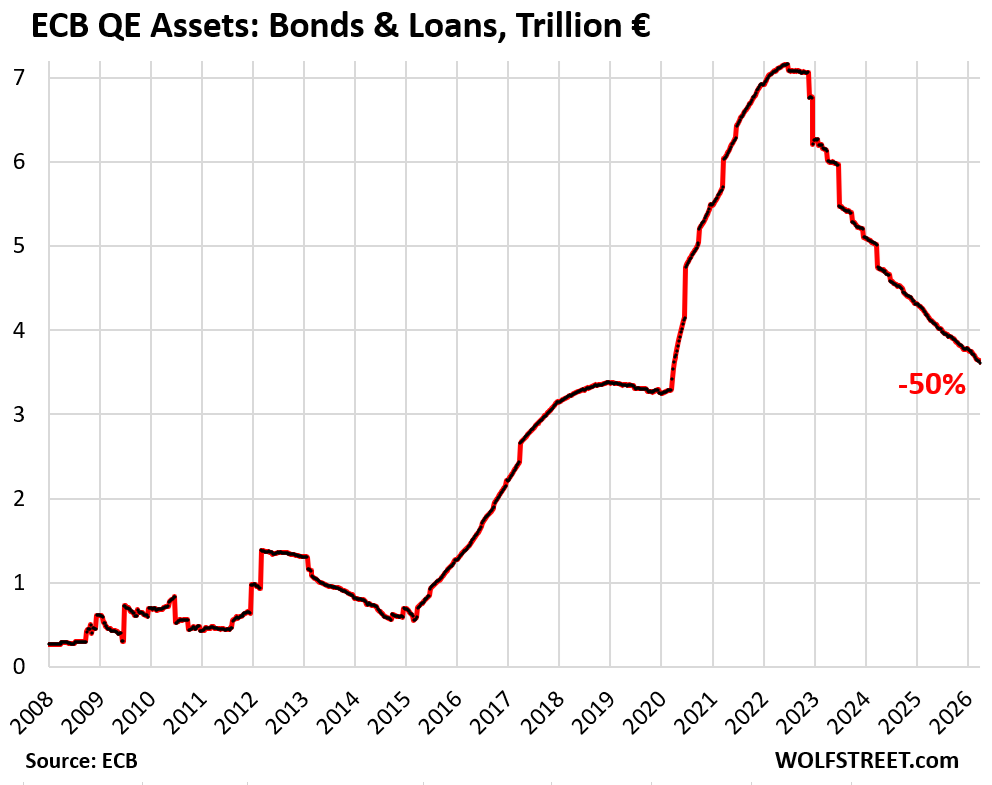
The ECB shed an additional €66 billion in March of its bonds and loans that make up its QE assets that had topped out at €7.16 trillion in mid-2022.
Since QT started, it has shed €3.55 trillion ($4.14 trillion), or 50%, of its QE assets, according to its balance sheet released today, far more than anyone thought the once-upon-a-time uber-dovish ECB, or any other central bank, could ever shed.
The two QE assets: Loans and bonds.
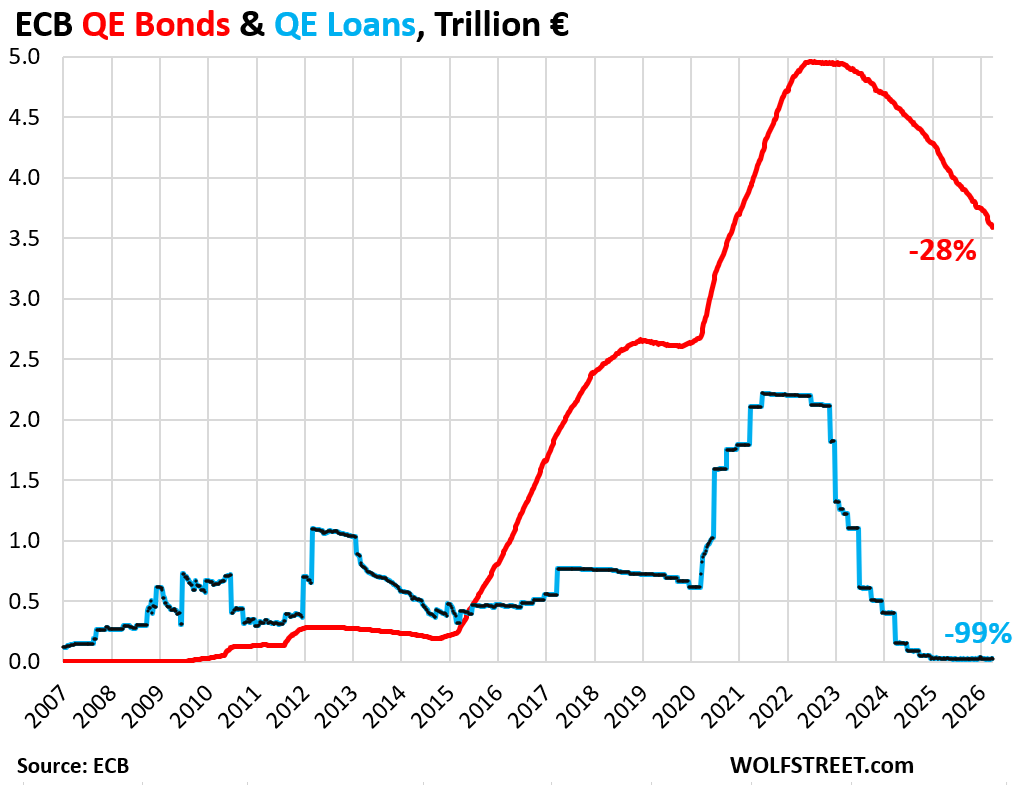
The ECB had conducted QE via two methods, bonds and loans. They ballooned from €690 billion in 2015 to €7.16 trillion by mid-2022. The bonds were mostly government bonds from the member states, but also included corporate bonds, mortgage bonds, and asset-backed securities that the ECB bought under two different programs.
In mid-2022, as inflation was already raging, the ECB flipped to QT. Since then, the ECB:
- Shed 99% of all its loans, from €2.2 trillion at the peak to near-zero now.
- Shed 28% of all its bonds, from €4.96 trillion at the peak to €3.59 trillion now.
To shed the loans, the ECB made the terms unattractive, and the banks paid them back.
Bonds come off the balance sheet as they mature on maturity date. In early 2025, the ECB removed the last caps, and no maturing bonds are replaced, and whatever matures reduces the balance sheet by that amount. The Fed should have done that too.
The ECB’s mark-to-market of its gold.
The ECB’s consolidated balance sheet represents the combined assets, liabilities, and capital of the individual central banks of the Euro Area’s member countries, of which the Bundesbank is the largest. When a country becomes a member of the Euro Area, that central bank’s balance sheet is added to the consolidated balance sheet of the ECB. Most recently, Bulgaria joined the Euro Area on January 1, 2026; Croatia on January 1, 2023.
The gold and gold receivables on the ECB’s consolidated balance sheet represent the holdings of the member central banks.
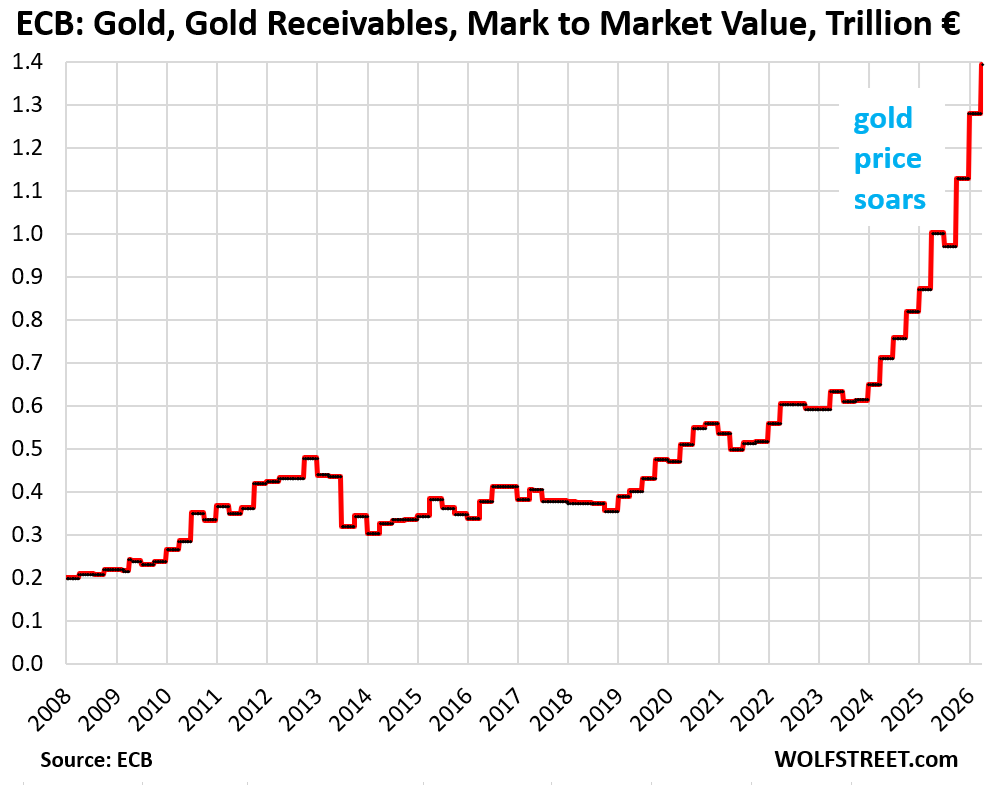
The ECB marks gold holdings to market prices every quarter. The price of gold expressed in euros rose in Q1 after the massive increases in January and the drop in February. So the ECB marked up its gold holdings by €113 billion on its balance sheet today, to €1.39 trillion.
In four of the past five quarters, the ECB marked up its gold holdings in huge steps. Since mid-2019, the ECB has marked up its gold holdings by nearly €1 trillion, reflecting mostly the surge of the price of gold in euros.
These mark-to-market adjustments are paper adjustments after the end of the quarter and do not involve purchases or sales of gold, or money printing, or QE or QT or whatever.
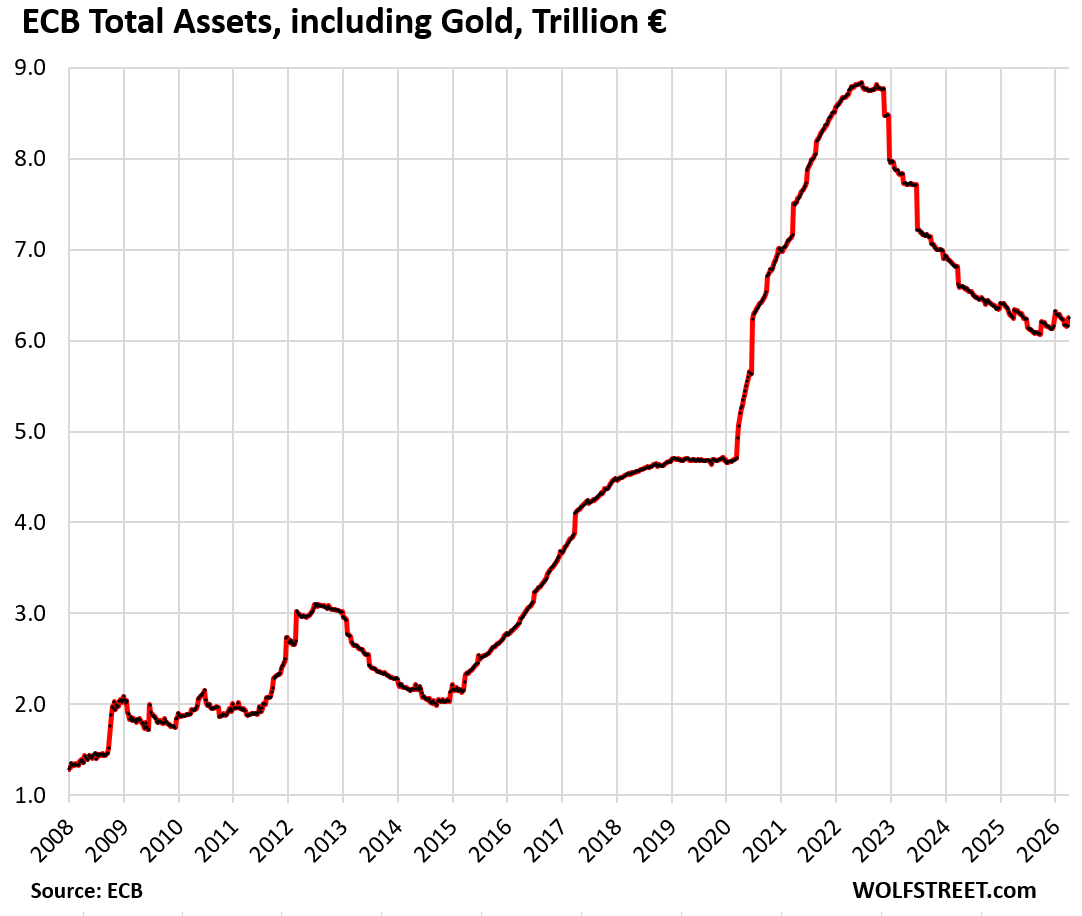
Total assets: This €113 billion mark-to-market adjustment of gold on this week’s balance sheet caused total assets to rise for the week by €91 billion, to €6.25 trillion. The huge mark-to-market adjustments of gold over the past five quarters was larger than the big drop in QE assets (loans and bonds) and has moved total assets higher.
And in case you missed it: The Bank of Japan tries to put a floor under the yen and a lid on inflation through QT, rather than with rate hikes. BOJ Accelerated QT Further, Started Selling Equity ETFs & J-REITs, Shed 12.6% of its Assets since the Peak
Enjoy reading WOLF STREET and want to support it? You can donate. I appreciate it immensely. Click on the mug to find out how: